
Latest from our Blog
Subscribe via RSSBy this point, you may be familiar with Plumpy'Nut®, the miraculous peanut paste in a foil pouch that is being used to treat children with severe acute malnutrition in communities around the world. To recap: the genius of this innovation is that children can be treated at home rather than as inpatients.
But what you may not know is that a variation of Plumpy'Nut®'s sister product, Nutributter® is being tested for improving the odds for pregnant women and their infants. Nutributter® is also a micronutrient-fortified semi-solid paste. It's also known as a lipid-based nutrient supplement (LNS). And the new formulation is called LNS P&L-- we can be sure that they'll come up with a catchier name when the studies are done. LNS P&L is being studied in government hospitals in Ghana (Atua and Akuse, and the St Martins de Porres Catholic Hospital at Agormanya (Manya Krobo District of Ghana), and the Somanya Polyclinic at Somanya (Yilo Krobo District of Ghana).
We found out about this trial from our friends at Edesia , the factory down the road which pumps out metric tons of Nutributter®, Plumpy'Nut® and Plumpy'Sup® every month.
Here is a snippet from the study design listed on clinicaltrials site:
> LNS-20gM) will, in addition to the multiple micronutrients provided in the MMN, supply
> energy (118 kcal/d), fat (...
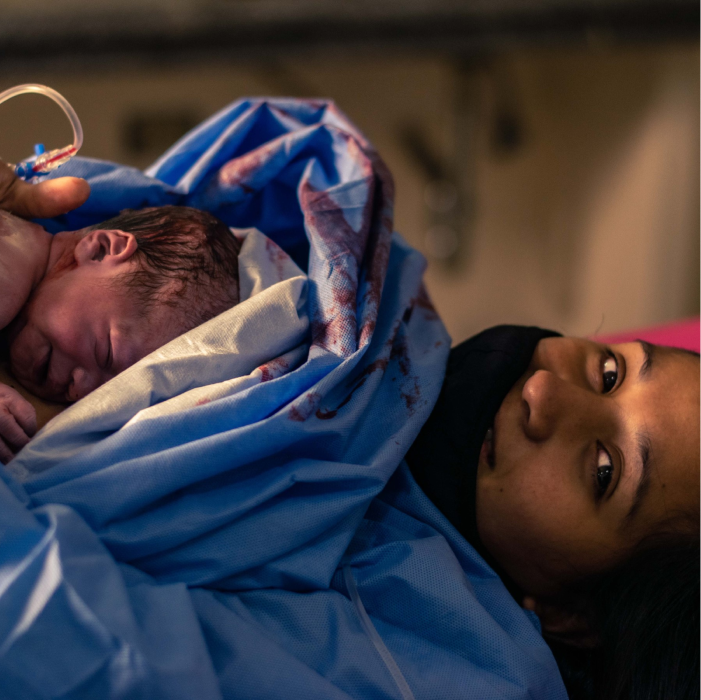
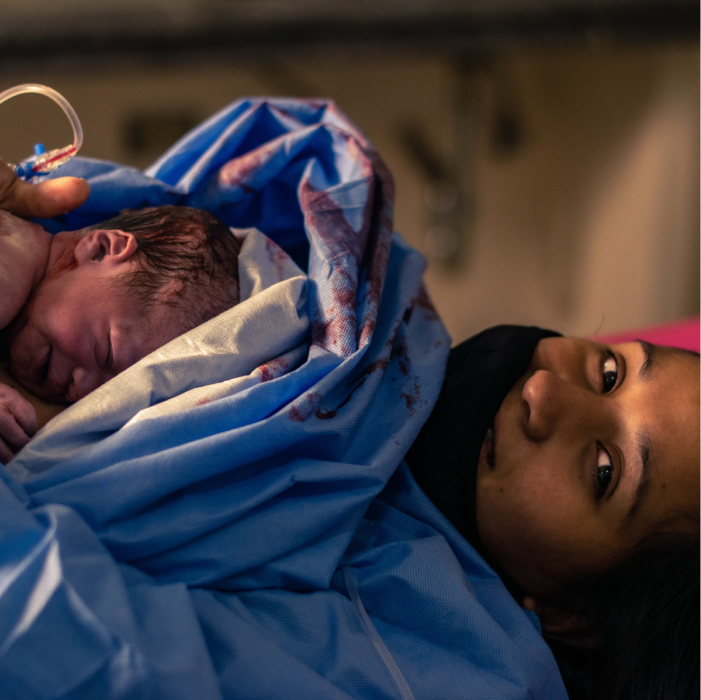
The first day of life is also the most risky, both for the infant--and often for the mother. This year's report on the State of the World's Mothers came out last week. The focus of this report is on the first day of life. Save the Children, authors of the report, developed the first-ever "Birth Day Risk Index" to assess newborn odds of survival on that very first day that they are born.
What is really striking in this report and in this new index is the extreme vulnerability of newborns during their first month, first week and first day and hours of life. The report breaks it down in a stark series of statistics. 60% of newborns die in the first month of life. Of these, 2 million die during the first week of life. And of these, 1 million die in the first day of life.
What also stands out is how poorly the United States fares as compared to other industrialized nations. In fact it it is dead last amongst its peers. In fact the report finds that the U.S. has 50 percent more first day of life newborn deaths than all of the other industrialized nations combined.
Part of the reason that newborn deaths now stand out is because such great progress has been made in reducing child mortality.
So what is to be done? The number one recommendation, with which we concur wholeheartedly is "Address the underlying causes of newborn mortality, especially gender inequality." Educated, well-...
The period between birth and the first week of life is one of the most treacherous for a newborn and its mother, and in low-resource settings the high risk of infection compounds the dangers to both. One of the more common threats to newborns, particularly in these settings, are umbilical infections, which render a newborn’s umbilical cord both a line to life and an anchor for deadly infection.
Recent studies in Nepal, Bangladesh, and Pakistan have unveiled a solution that is simple, inexpensive, and highly effective: applying chlorhexidine solution to newborn navels during the first week of life staves off umbilical infection. According to a study out of Johns Hopkins University, more than 40% of the 8.8 million children under 5 who die each year are neonates--and in resource-poor regions, more than half of them die of serious infections.
Infants’ risk of infection and death during the first weeks of life is reduced by 24% if chlorhexidine is used to clean the umbilical cord for 7 of the first 10 days after a child is born, the study reports. More importantly, this method is a “simple, safe, effective and inexpensive intervention,” as JHU’s Abdullah Baqui explains. What's more, “large-scale implementation of this intervention with universal coverage has the potential to...
Simply put, the world needs many more frontline health workers. If we’re looking for an approximate number it would be adding 350,000 to global health efforts through 2015. Seems like an attainable goal, right? Not so fast… the job description isn’t glamorous, low pay (if any pay at all), and nearly zero benefits. People are hardly clamoring to dive into a vocations with a notoriously high burnout rate.
Why is this so critical? In many countries there are less than one physician per 10,000 people. If you are lucky enough to be seen by the doctor, the wait time has to be life threatening in itself. It’s also safe to presume that even the best physicians get tired, and quality of care has to be impacted when there is absolutely no respite or help provided.
One group is looking to change the landscape for global public health forever. The Frontline Health Workers Coalition brings together nearly all the power players in NGO’s alongside fantastic corporate partners. This unified front is aiming to reinvent the frontline health worker role. By providing training, support, supplies, and in some cases compensation, the tide is beginning to turn.
Maternova has been accepted as a member in this prestigious and motivated group. True, we’re not a Pfizer, or CARE, but we’re a loud voice for championing the causes affecting women and children...
A bicycle inner tube? Where were we on this? Well to continue the story, in 2009 Drs. Mark Hauswald, Nancy Kerr and colleagues published in the International Journal of Emergency Medicine. Their findings were on an improvised pneumatic anti-shock garment. At that stage, the device was three inner tubes, one around each leg and one around the pelvic area. The tubes were pumped up to 45 psi. They found that both the improvised (bike tire) device and the non-pneumatic anti shock garment decreased distal aortic blood flow but that the improvised device decreased it by a higher margin.
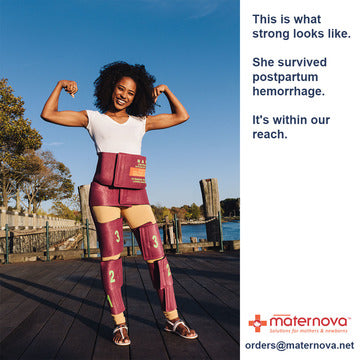
As you can see in the photo above, the team has progressed rapidly. Fast forward to today where the team has a Saving Lives at Birth grant securely under their 'belts' and is piloting the project in Nepal. The training and pilot took place over 8 months and the midwives who were trained all still have their devices at the ready in their villages. Hauswald notes that the Nepali midwives are well-trained and very, very opinionated. This will ultimately result in a long development process but a much better end product. At present it is sewn with a (kelly green) bedsheet and bicycle inner tubes that could be manufactured inexpensively almost anywhere.
Though training and use of the device is going well, Hauswald and team want to do a trial in a community hospital next. He points out that if this is seen as a 'smart, modern solution' useful in hospital settings, it...
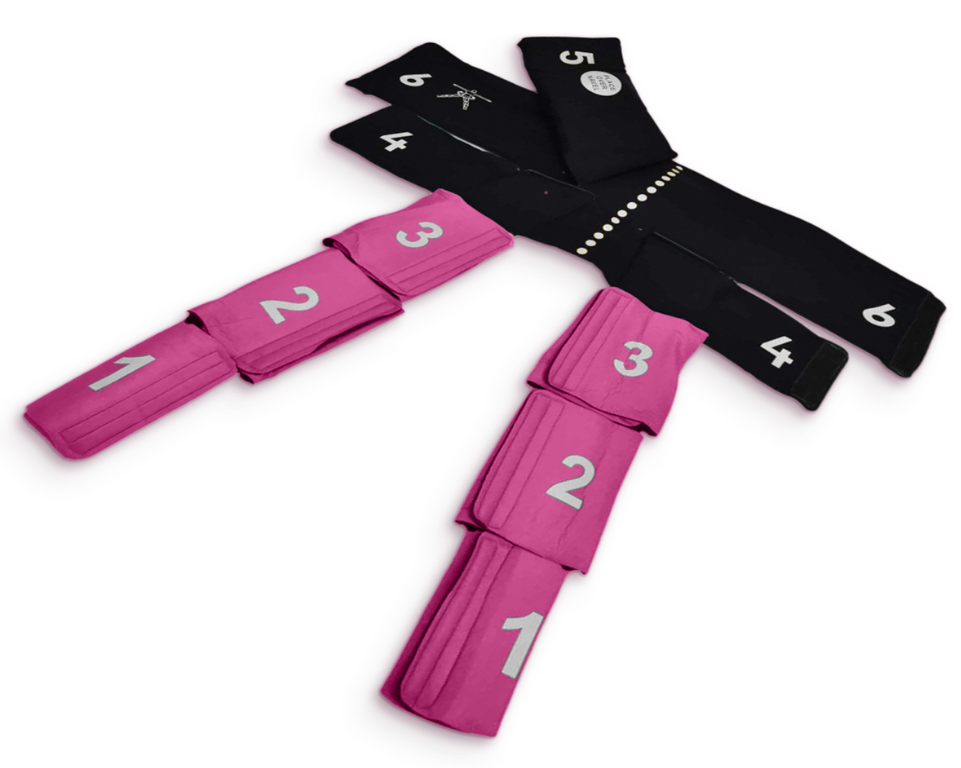
We've been following the MOM-CAPP device with great interest. Since we are already fans of the non-pneumatic anti-shock garment, how could we not be intrigued by a potentially faster/better version, a pneumatic anti-shock device, that could be locally made?
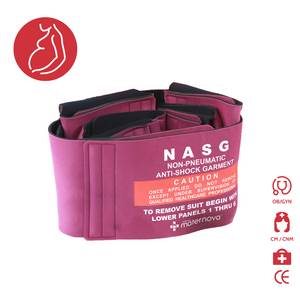
So let's first cover the definitions-- pneumatic means that the clinician pumps up the device (in this case with a bike pump) while non-pneumatic means.. no pumping involved.. just pressure from the tightness of the velcro and the ball built into the NASG which presses against the abdomen.
It occurs to me here that if our ancestors had come up with a simple pressure device to stop postpartum hemorrhage around the time they came up with the wheel we would be in a lot better shape today as a society. In any case...
We had the pleasure of talking with Mark Hauswald, and ER doctor, who along with his wife, Nancy Kerr, an obstetrician, works in Nepal on the CAPP. The CAPP, a circumferential abdominal pelvic pressure device, wraps around a woman suffering from postpartum hemorrhage. Mark's team presented multiple results at the FIGO meeting in the fall.
The current prototype MOM-CAPP was made in Nepal out of sewn bedsheet cloth and a bike pump and bicycle tire tubes. 58 nurses and auxiliary midwives were trained in the device were part of the study. 25% of them ended up using the device in a clinical emergency because they needed them and they were available. To find out the results, stay...
Last night while I was dutifully scouring the web in search of the latest news relevant to our mission here at Maternova, I was taken aback by an article describing the recent suicide of a 17 year old girl in Halifax, Nova Scotia. Rehtaeh Parsons was only 15 when she was gang raped by four boys at a friend’s home. After the attack the boys thought it would be fun to send photos of the rape across the social media landscape. A full two years later, after being relentlessly harassed and bullied, she hung herself in her family home. The boys have yet to be brought to justice due to ‘insufficient evidence’. Are photos not recognized as evidence in any court? Can someone explain to us how this heinous crime has gone unpunished? A mother has lost her child in a way that makes any mother cringe and shudder. Where is the justice for our girls? It’s almost amusing that the G8 Countries just yesterday made a collective statement to end rape in areas of conflict. The United States and Canada are part of the forum now fraught with passion towards the plight of women? Something’s being championed for headline purposes only, since they clearly don’t practice what they preach.
Rehtaeh’s rape happened in Canada, but rape and sexual assault are all too common in our own country. It’s estimated roughly 90,000 rapes...