



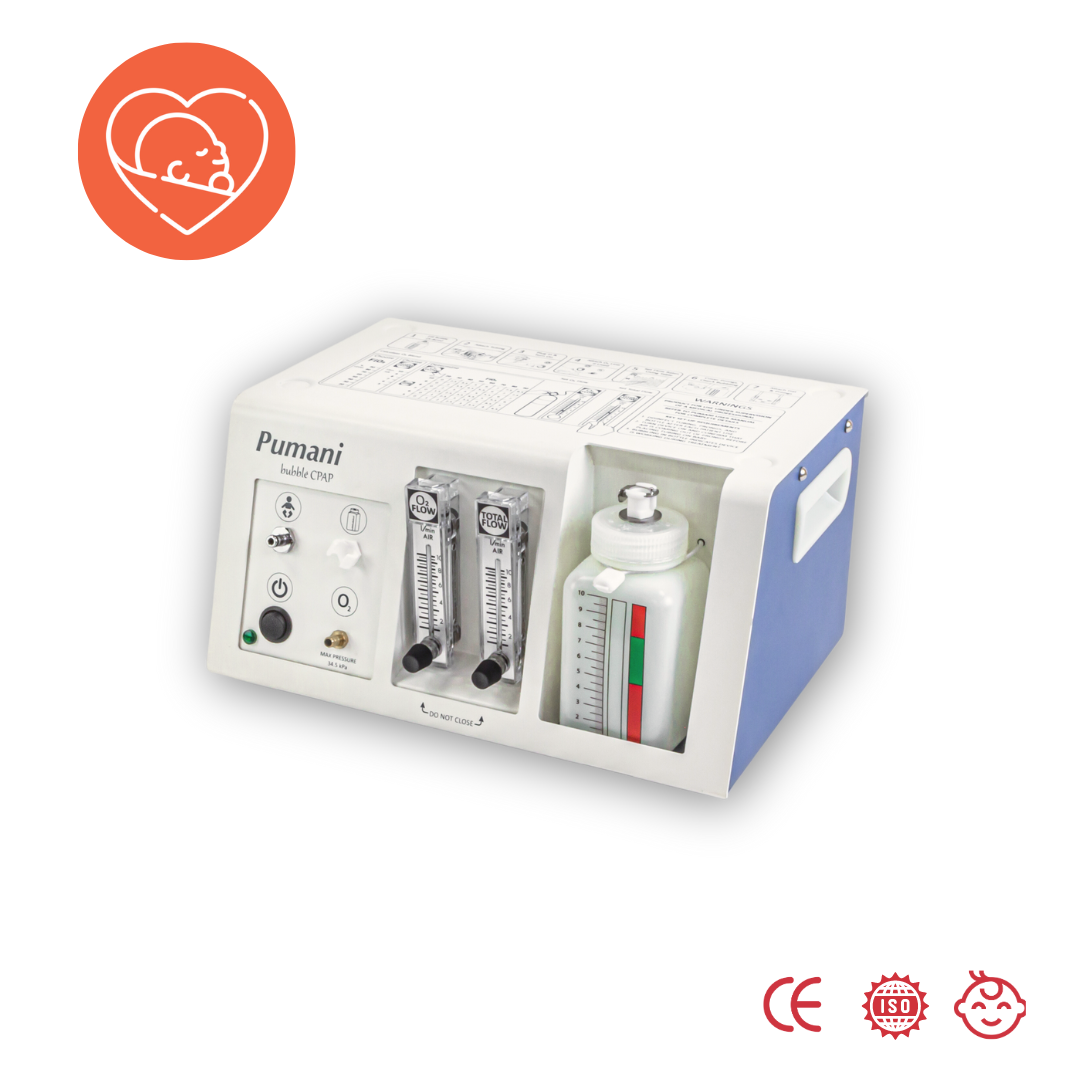


Pumani Bubble CPAP
NHHDEVPBCPP9
Where is the price?
Pricing is based on shipping location and the number of units ordered. To request a price, please use the Request a Quote button below. A sales representative will respond to you quickly.
Product Features
- Non-invasive bubble CPAP system
- Designed for premature newborns and infants (1–10 kg)
- Helps manage neonatal respiratory distress syndrome (RDS)
- Compatible with supplemental oxygen
- Adjustable therapeutic airway pressure
- CE-marked medical device
- Manufactured in an ISO 13485-certified facility
- Designed specifically for low-resource hospitals
- Affordable alternative to conventional bubble CPAP systems
Pumani Bubble CPAP
The Pumani bubbleCPAP (called bCPAP) is used to treat respiratory distress syndrome (RDS) in premature neonates and respiratory illness in young children from 1 to 10 kg. Designed specifically for the low-resource hospitals, it is an effective, affordable and user-friendly solution that is effective in combating respiratory distress. The device allows the flow of pressurized air into the infant’s lungs through nasal prongs and tubes. This air flow can be augmented with oxygen from a separate source as well. The air flow is pressurized through a very simple process of submerging the tube in a bottle of water attached to the device. Pressure can be adjusted by the clinician (0 to 10 L/min and pressure from 5-8 cm H2O.). This process of delivering pressurized air flow into the infant’s lungs maintains lung volume at the end of expiration and thus reduces respiratory fatigue and increases oxygenation.
In a peer-reviewed study, it was proven that use of a low-cost bCPAP system to treat neonatal respiratory distress resulted in 27% absolute improvement in survival. The beneficial effect was greater for neonates with very low birth weight, RDS, or sepsis. The study determined that implementing appropriate bCPAP devices could reduce neonatal mortality in developing countries.
Bubble CPAP is widely recognized as an effective non-invasive respiratory support strategy for newborns experiencing respiratory distress. By helping maintain functional residual lung capacity and improving oxygenation, the Pumani Bubble CPAP supports clinicians in delivering evidence-based neonatal respiratory care while minimizing the need for intubation where appropriate.
Clinical Applications
The Pumani Bubble CPAP is suitable for:
- Neonatal respiratory distress syndrome (RDS)
- Premature infant respiratory support
- Neonatal intensive care units (NICUs)
- Special Care Baby Units (SCBUs)
- District and regional hospitals
- Pediatric wards
- Low-resource healthcare facilities
- Humanitarian and emergency health programs
- Neonatal referral hospitals
Product and ordering information
- Minimum quantity of one Pumani Bubble CPAP units per order
- English instructions available
- Not for sale within the United States
Regulatory & Quality Standards
- Meets WHO guidelines for use in low-resource settings
- The Pumani Bubble CPAP is made by Hadleigh Health Technologies which is an ISO 13485 registered company
- The Pumani Bubble CPAP has received the CE mark.
Intended Users
The Pumani Bubble CPAP is designed for use by:
- Neonatologists
- Pediatricians
- Neonatal nurses
- Respiratory therapists
- Midwives trained in neonatal care
- Biomedical technicians
- Hospital neonatal units
- Humanitarian medical teams
FAQ
Why was the Pumani CPAP developed?
The Development of Pumani has been a collaboration between Hadleigh Health Technologies, Rice University, Queen Elizabeth Central Hospital, the Malawian Ministry of Health, and Texas Children’s Hospital. Based on the results from clinical testing, the Pumani partners received additional funding to distribute Pumani units to every public central and district hospital in Malawi. The goal was to develop a bubbleCPAP that was rugged and affordable but delivered the same or better pressurized air flow as bubbleCPAPs in industrialized countries.
What is the capacity of the bubbleCPAP?
- Oxygen Blending 21-90%
- Gas Supply Integrated Air Compressor
- Total (blended) Flow Rate 0-10 L/min
- Oxygen Flow Rate 0-10 L/min
- Pressure 0-10 cm H20
- Voltage 220V and 50Hz
- Power Consumption 15 W
- Accessories
- Bottles, Filters
- Pumani Patient Circuit Kit - 10 x Complete Patient Circuits including Patient Tubing, Tube Holders, Fish Elbows, Hats & Hat Clips, Nasal Prongs
Is the Pumani CPAP in use with patients?
Yes the device is used in hundreds of hospitals in 35 countries. A 2020 study in Tanzania showed that treatment with bCPAP had a 30% clinical improvement in survival to discharge.
What comes in a package or kit for one Pumani CPAP?
- Bottle (1)
- Inspiratory Tubing (3)
- Expiratory Tubing (3)
- Fish Elbows (6)
- Hat Clips (6)
- Tubing Clip (3)
- Variety of Nasal Prongs (6 prongs, sizes 0-5)
- Hats (3 hats, size small, medium, large)
- Power Cord – UK Plug (1)
- Spare parts kit (not shown)
Is the product suitable for low-resource settings?
Yes, absolutely the product was built for use in Malawi and is now successfully in use in multiple countries.
Can the Pumani CPAP be used in every age group?
The bCPAP is for infants between 1 to 10 kg
What conditions can the Pumani Bubble CPAP help manage?
The device is primarily intended to provide non-invasive respiratory support for premature newborns and infants with respiratory distress syndrome (RDS) and other neonatal respiratory conditions requiring continuous positive airway pressure under the supervision of trained healthcare professionals.
Comprehensive training materials are available to support safe device setup, patient monitoring, routine maintenance, and troubleshooting. These resources help healthcare teams implement bubble CPAP therapy consistently across neonatal care settings.
Training videos
Section 1 - What Is CPAP and How Does It Help?
Section 2 - When Does a Child Need CPAP?
Section 3 - Which Baby Would You Put Onto CPAP?
Section 4 - How To Set up the Pumani bCPAP
Section 5 - Preparing to Put a Baby on CPAP
Section 6 - Attaching the Baby to the CPAP Machine
Section 7 - Attaching a Real Baby to CPAP
Section 8 - Monitoring and Care of a Baby on CPAP
Section 9 - Weaning a Baby off CPAP
Section 10 - Cleaning the Tubes and Bottle
Section 11 - Communication with Mothers
Section 12 - Putting It All Together; The Story of Chigonjetso
Section 13 - Repairing the CPAP Machine